



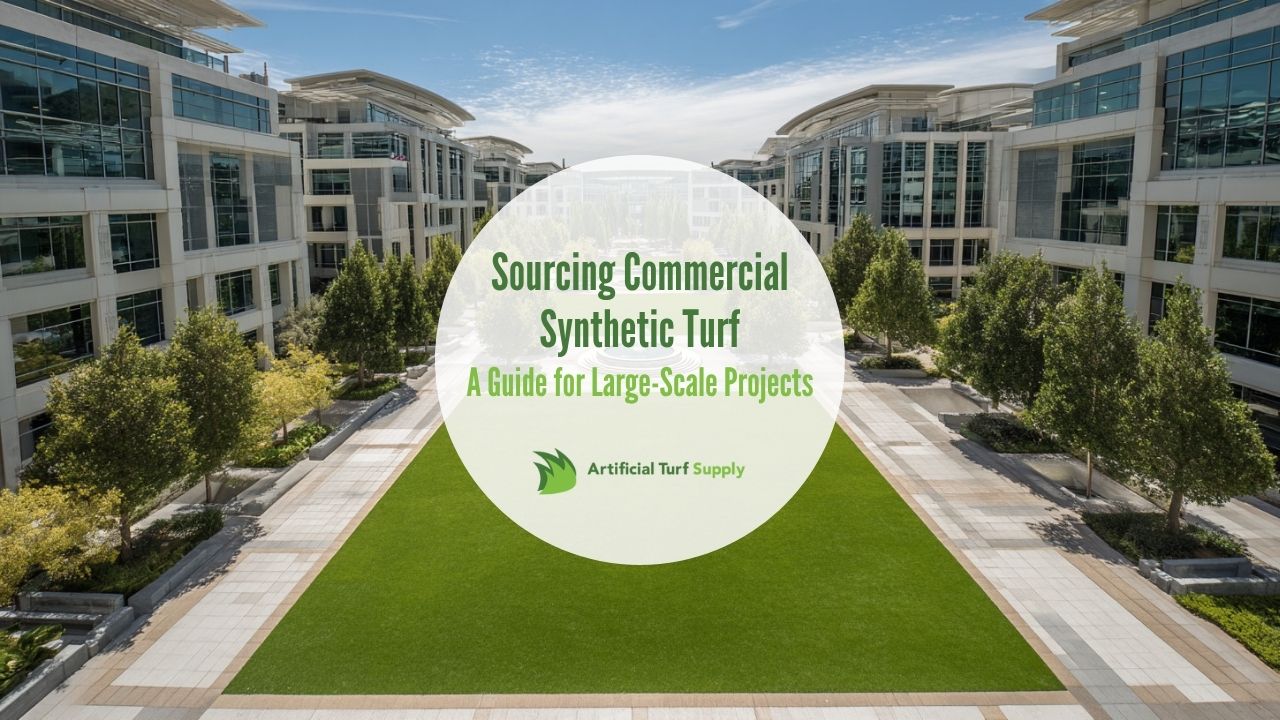
Being able to make the perfect choice for commercial synthetic turf lets you solve so many problems at once. If you’ve ever tried keeping natural grass looking great on a commercial property, you know exactly what I’m talking about. Constant watering, unending mowing, fighting the appearance of those frustrating brown spots (always showing up at the wrong time), and trying to keep costs down? Yep. Large-scale projects need next-level turf solutions.
So maybe you’re managing a corporate campus, a municipal park, multi-family property, athletic facility, or maybe your personal home just has a lot more square footage than the average yard. Whichever of those describes you, your decision is about more than just picking the greenest option. You need to understand turf durability specs, navigate supplier contacts, balance the total cost of ownership and maintenance, and somehow avoid all the marketing tricks out there.
We’re covering all the necessary steps below, but here’s a not-so-secret Step Zero: find a good turf distributor that you trust. They can help you dig even deeper into all of these challenges to help you find the best commercial synthetic turf for you.
Not only is commercial synthetic turf a great option for such large projects, the Artificial Turf Supply team has combined their decades of expertise to give you some insights into how you can navigate this maze like a pro. All the steps from understanding your project and choosing the best turf to installation and maintenance.
Step 1: Identify Your Project Requirements
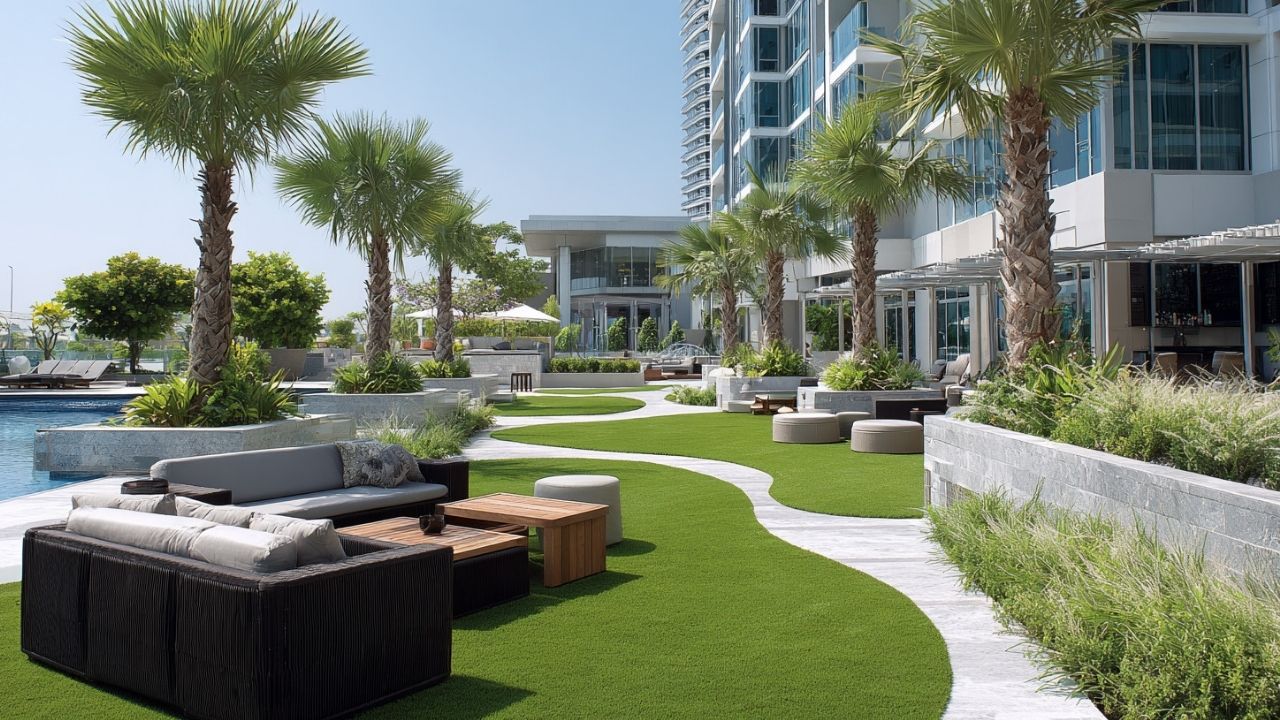
An old boss of mine used to call this first step “Painting the Target”. I’m still not sure if it was a military or archery metaphor, but it’s certainly the best first step to sourcing the right commercial synthetic turf for your project. So, before even thinking about contacting artificial grass suppliers, get crystal clear on what you actually need. Commercial projects can all look very different, with different needs. A hotel courtyard has different demands than a rooftop lounge or a municipal sports field. From square footage to foot traffic and sun exposure. And all that effects what type of turf you should be exploring.
What Does Your Commercial Space Need?
Here’s where you need start asking yourself some key questions. What’s the primary use case for the space? High-traffic corporate landscaping? Pet-friendly areas for multi-family properties? Athletic fields that’ll see harsh daily use? Your answer will dictate what factors and features you should search for in your turf.
-
- Corporate campuses & municipal parks: Prioritize aesthetics + durability
- Multi-family properties: Look for low maintenance + kid and pet-friendly features
- Athletic facilities: Shock absorption + high wear resistance are a must
- Rooftops & pool decks: Narrow it down to lightweight, UV-resistant options with superior drainage
- Healthcare & hospitality: Start your search with non-toxic, hypoallergenic materials
How Much Do You Need? (Accurately Calculate Your Square Footage)
Understanding how much artificial grass you’ll need for your commercial space seems pretty obvious. But you’d be surprised how often buyer’s don’t quite get the square footage right. The size of your space might easily allow to find some bulk discounts, but it’s very easy to forget to account for the square footage needs of a weirdly-shaped space or how much extra you’ll want to ensure full coverage. Like the old craftsman’s saying goes, “Measure twice, cut once”.
So when you’re adding up all your needed turf square footage, be sure to account for these:
-
- Irregular shapes and borders
- Waste allowance (typically add in an extra 5-10%)
- Seaming requirements
- Future expansion plans
When I first started working at Artificial Turf Supply, I was talking to a property manager down in Phoenix. He ordered exactly what his CAD drawing showed. Zero waste allowance added in. And he ended up short by 800 square feet because of some irregular corners around his pool deck. In that Arizona heat, waiting three weeks for a second shipment meant his residents were stuck staring at half-finished turf that blocked access to their pool.
How Much Traffic Will Your Turf See Regularly?
It’s great to have artificial grass that looks beautiful, but it’s critical that your turf also be able to keep its shape and texture during it’s regular usage. So be really honest about your expected foot traffic. A decorative courtyard that sees 50 people daily has different needs than a Playground serving 500 kids. Both are great solutions… in the right space.
Turf in high-traffic commercial spaces need:
-
- Higher face weight (60-80 oz minimum)
- Denser pile construction
- UV-stabilized fibers
- Reinforced backing systems
What’s Your Realistic Budget?
If you’re a business owner or operator, you know the question of budget is never a simple calculation. It’s the same with your landscape project, so include everything: product costs, shipping, installation, base preparation, infill, drainage systems, and ongoing maintenance. A $50,000 turf purchase can easily become a $75,000 project once you factor in logistics and installation.
So this question is kind of two questions in one:
-
- How much can you afford to spend with everything considered?
- Once you’ve chosen your turf product, how much more do you need to budget in order to get it delivered, installed, and maintained?
Obviously, the trick is getting those two answers to match. But that’s what this guide is all about.
Step 2: Understand Commercial-Grade Synthetic Turf Specs
A few decades ago, you might have only had a few artificial grass options for your project. Definitely not the case today. And not all of today’s turf is created equal. High-quality commercial-grade products have some important characteristics that separate them from residential options.
Face Weight & Pile Height
Face weight (which is measured in ounces per square yard) is the density of the turf’s fibers. Higher density gives your commercial space better durability and resilience:
-
- 40-50 oz: Budget-friendly, light-traffic areas
- 60-70 oz: Standard commercial use, moderate traffic
- 80+ oz: Premium durability, heavy traffic
Pile height is how tall the blades stand off the backing, and it really impacts your turf’s look, feel, and functionality:
-
- 1.0-1.5 inches: Sports fields, high-traffic zones, cost-effective
- 1.5-1.75 inches: Balanced aesthetics and durability
- 1.75-2.0 inches: Luxury appearance, lower traffic areas
Today’s Common Turf Fiber Materials
As you’re researching different types of artificial turf, you’ll run across polyethylene and prolypropylene options the most. Though nylon is often the go-to material in high-performance turf applications like athletic fields (both indoor and outdoor).
Here’s a deeper blog article on choosing the best artificial turf for your project. But here’s a quick summary of the strengths of the different materials:
-
- Polyethylene: Soft, realistic, most common for landscaping
- Polypropylene: Budget option, less durable
- Nylon: Extremely durable, best for sports fields (but pricier)
- Blended systems: Combine materials for optimal performance
Backing & Drainage Systems
I got a call from a Tampa-based facilities director who was in a near-panic. Their courtyard turned into a swamp every afternoon during rainy season. Turns out the contractor had installed a budget-quality turf with a 10-inch-per-hour drainage rate. I don’t know if you’ve spent any time in Tampa, but they can get A LOT of rain. So, we came in with TURBOFLO™ system turf… now even those legendary Florida downpours drain out in minutes.
The moral of that story? Commercial turf needs industrial-strength backing with appropriate draining:
-
- Primary backing: Holds fibers in place
- Secondary backing: Provides dimensional stability
- Drainage rate: Look for 30+ inches per hour (systems like TURBOFLO™ deliver this)
Poor drainage = standing water = unhappy clients = expensive fixes. Budget turf support solutions are often just a way of inviting huge headaches down the road… which are rarely cheap or easy to repair.
Commercial Turf Safety Certifications
It doens’t matter if you’re a homeowner or commercial space manager, safety has to be your first priority. Take a look at these certifications to make sure you’ve accounted for those that apply to your space.
-
- PFAS-safe: No “forever chemicals”
- Lead-free certified: Essential for schools, Playgrounds, healthcare
- ASTM fall height ratings: Required for Playgrounds
- Fire resistance ratings: Necessary for some commercial applications
Step 3: Source Reliable Turf Suppliers
Have you ever regretted a business partnership? Unfortunately, it’s a fairly common story, so I always tell customers they should view their supplier in that same light. Because finding the right turf supplier can absolutely make or break your project. Unless you’re already an artificial grass expert, you’ll need more than just a product catalog. So make sure to find a turf partner who understands commercial needs and logistics.
| Manufacturer | Distributor | Retailer |
|---|---|---|
| Factory-direct pricing (no middleman markup) | Regional inventory | Smaller projects |
| Consistent product availability | Faster local delivery | Residential customers |
| Technical support and specifications | Relationships with local installers | Limited commercial inventory |
| Customization options for large orders |
For large-scale projects, going direct to manufacturers gets you the best balance between product options and availability, value for your dollar, and ongoing customer service for those little ongoing needs every project has.
Evaluate Supplier Capabilities
No matter who you’re considering as your commercial synthetic turf supplier, make sure you take the time to ask these questions. The conversation will not only give you great insights into shipping and delivery processes, but it’ll give you an opportunity to get a feel for their team’s personality and customer service practices.
-
- Can they handle your order volume?
- What’s their lead time for large orders?
- Do they offer free samples before bulk ordering?
- What’s their shipping infrastructure?
- Do they provide installation support or referrals?
- What warranty do they offer?
Check References & Portfolio
Request case studies of similar projects. A supplier who’s successfully outfitted a 50,000 sq ft corporate campus is more credible than one whose biggest project was a backyard putting green. I’ve incldued a few example case studies below, so feel free to explore those in case they’re helpful.
And please feel free to call the Artificial Supply Team at 877.525.8873. We’d love to understand your project goals and challenges, and help you begin making some choices to get things started.
Step 4: Evaluate Product Quality
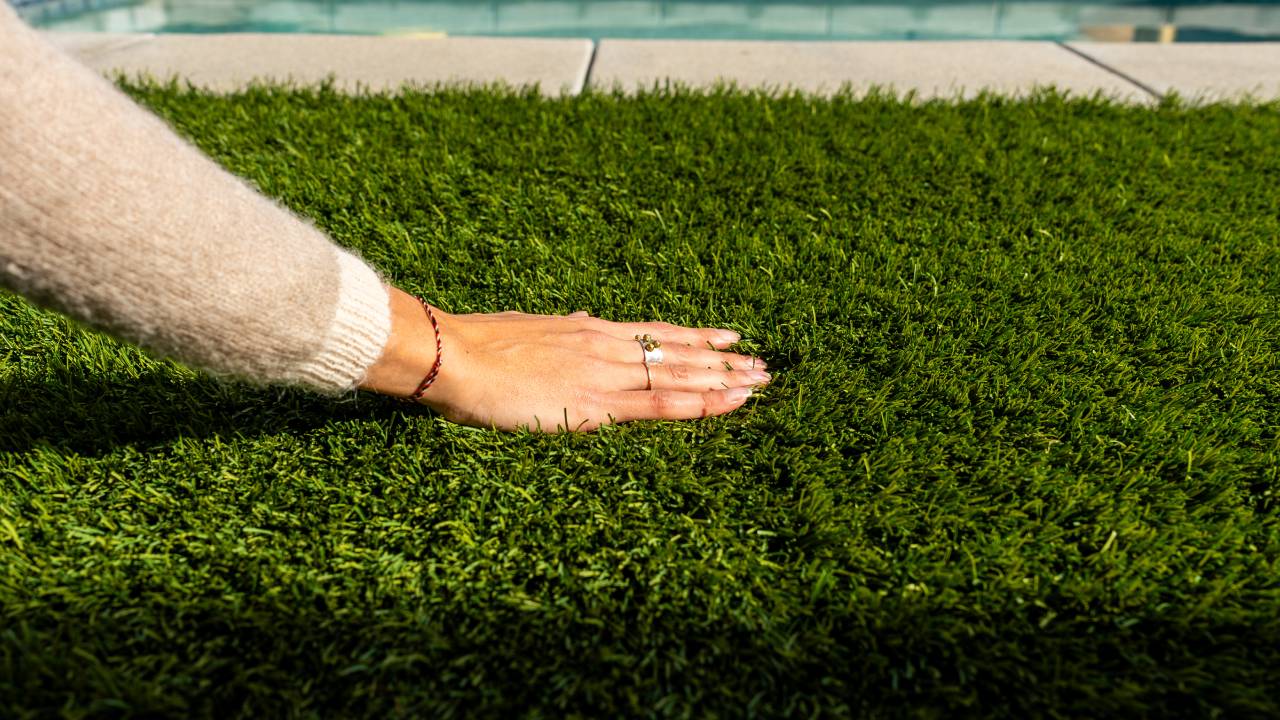
You know what I love? An ice cream shop that gives you a few taste tests before I commit to a flavor. I mean, that’s just good business right there. It’s the same for your turf. Never, and I mean never, order commercial turf without seeing and touching samples first. There’s just too much on the line, and you can’t get any sense for a turf’s actual looks or feel through your computer screen.
Request Sample Kits
Quality suppliers offer free sample kits. Evaluate:
-
- Visual realism: Does it look like grass or a green doormat?
- Texture: Run your hands through it. Soft? Scratchy?
- Resilience: Press fibers down. Do they bounce back?
- Color variation: Multiple shades look more natural
- Backing quality: Thick, well-constructed backing = longevity
Step 5: Compare Pricing Models
Commercial turf pricing is more complex than “X dollars per square foot.”
Understand Pricing Components
-
- Base product cost: Per square foot pricing
- Infill: Sand, crumb rubber, or premium options like Envirofill
- Shipping: Can be substantial for large orders
- Installation: DIY vs. professional (typically $3-8/sq ft)
- Base preparation: Excavation, grading, compaction
- Accessories: Seaming tape, adhesive, edging, spikes
Volume Discounts
For projects over 10,000 square feet, negotiate. Manufacturers often offer:
-
- Tiered pricing based on volume
- Bulk shipping discounts
- Package deals including installation supplies
Total Cost of Ownership
Factor in long-term costs:
-
- Natural grass: $0.25-0.50/sq ft annually (water, mowing, fertilizer, repairs)
- Synthetic turf: Minimal maintenance, 15-20 year lifespan
A $100,000 turf installation that eliminates $15,000 in annual maintenance pays for itself in 6-7 years.
Step 6: Finding Specific Products Made for Each Commercial Use
Now, it’s time to narrow our focus a bit more. Once you’ve identified the general type of turf for your commercial project, you’ll need to start comparing specific products. With so many brands, suppliers, and products out there today, that can feel like a tall order. I’ve compiled some of our top-performing and well-reviewed options for different project types.
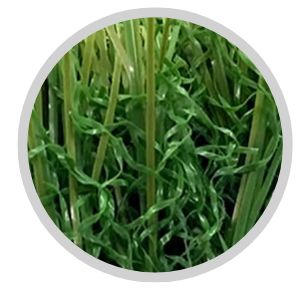 |
For Corporate Campuses & Municipal Parks: LXR PRO-73SSpecs: 1.75″ pile height | 69 oz face weight | Multi-tone dual-blade system Why it works: This is the “wow factor” turf. The lush aesthetics combined with serious durability make it perfect for high-visibility areas where you need to impress clients while handling daily foot traffic. The multi-tone blade system creates that natural, professionally-maintained lawn look without the professional maintenance costs. Best for: Corporate headquarters, city parks, hotel landscapes, public courtyards where appearance matters as much as performance. |
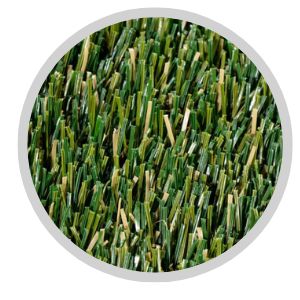 |
For Multi-Family Properties & High-Traffic Zones: 70T SeriesSpecs: 1.5-1.625″ pile height | 70 oz face weight | Ultra-soft feel Why it works: This is Artificial Turf Supply’s best-seller for good reason. It strikes the perfect balance between premium appearance and practical durability. Residents get a soft, comfortable surface that looks great year-round, and property managers get a low-maintenance solution that can handle everything from kids playing to community events. Best for: Apartment complexes, condos, resort lawns, commercial green spaces with sustained use. |
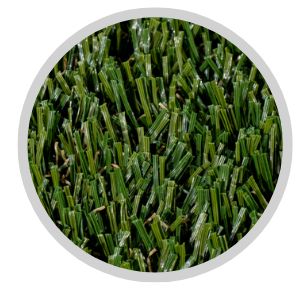 |
For Budget-Conscious Projects: 50T SeriesSpecs: 1.0-1.5″ pile height | 50 oz face weight | Clean-cut appearance Why it works: Don’t let the lower price fool you—this is still high-traffic rated turf. It’s the smart choice when you need reliable performance without premium pricing. Perfect for projects where budget constraints are real but quality can’t be compromised. Best for: Rental properties, municipal projects with tight budgets, light-use public spaces, phased installations where you’re covering large areas over time. |
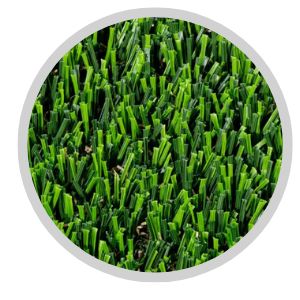 |
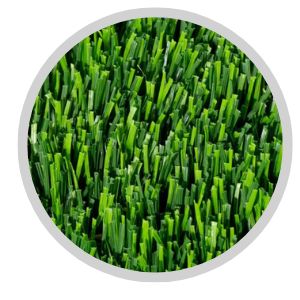
For Rooftops & Compact High-Wear Areas: 69TSSpecs: 1.0″ pile height | 69 oz face weight | Compact durability Why it works: Short pile height doesn’t mean low quality. This turf packs 69 ounces of face weight into a 1-inch profile, making it incredibly durable for its size. The compact design is ideal for rooftops where weight matters, and the high density handles intense foot traffic in smaller spaces. Best for: Rooftop lounges, retail plaza landscaping, pool decks, multi-family courtyards, urban spaces with weight restrictions. |
 |
For Athletic Facilities & Heavy-Use Areas: 80TSSpecs: 1.75″ pile height | 80 oz face weight | Heavyweight performance Why it works: This is the heavyweight champion of commercial turf. When you need a surface that can take a beating day after day—sports fields, large developments, high-traffic commercial spaces—this is your answer. The plush 1.75″ pile provides comfort while the 80 oz face weight ensures it won’t flatten or wear out prematurely. Best for: Sports fields, athletic training areas, large-scale commercial developments, anywhere sustained heavy foot traffic is guaranteed. |
For Fitness Centers & Training Facilities: ATS Gym Turf
Specs: Varies by application | Engineered for traction and shock absorption
Why it works: Gym turf isn’t just about looks—it’s about performance and safety. This specialized turf is engineered for traction during sprints, shock absorption for plyometrics, and durability under heavy equipment. It’s designed to handle sleds, weights, and intense training without breaking down.
Best for: Fitness centers, indoor tracks, cross-training zones, sports training facilities, functional fitness areas.
Don’t Forget the Infill
Once you’ve chosen your turf, you still have an important decision to make. What’s the best artifical turf infill for your project’s needs? Infill is basically a material that is dispersed into the turf after it’s installed to help keep it resilient and springy. And like your variety of turf options and features, there are a few key things to consider for your infill choice.
-
- Envirofill: Premium antimicrobial infill that reduces heat and controls odor—essential for pet areas and high-traffic zones
- Crumb rubber: Cost-effective, provides cushioning for athletic applications
- Sand infill: Budget-friendly, adds weight and stability
Step 7: Negotiate Contracts & Terms
Alright, you’ve done the necessary artificial grass research and chosen the perfect turf, so now you need to start making sure you’re still on target to maintain your budget. Take a step back and look back through all your choices so far, make sure you have a good understanding of each of these components of your turf and agreement, as well as how they’re affecting your budget’s bottom line.
-
- Product specifications: Exact model, color, pile height, face weight
- Quantity: Square footage with waste allowance
- Pricing: Per-unit cost, volume discounts, payment terms
- Delivery schedule: Lead times, shipping method, delivery location
- Warranty terms: Coverage period, what’s included/excluded
- Return policy: Defective product procedures
Commercial and Large Turf Project Payment Terms
Often, these large-scale commercial projects easily qualify for bulk rates, and this can impact both product and delivery pricing. So keep in mind that you may have some room to negotiate in a few important spots on your contract:
-
- Deposit structure: Typically 30-50% upfront
- Progress payments: Tied to delivery milestones
- Net terms: 30-60 day payment windows for established businesses
- Financing options: Some suppliers offer 0% financing programs
Warranty Coverage Details to Know
Your commercial synthetic turf project is an investment, so make sure you know all the ins and outs of the warranty and its coverage. Some of the basics that every warranty should cover include manufacturing defects (10-15 years should be expected), UV degredation (ensuring your turf doens’t fade), and backing integrity (basic delamination protection).
But you also want to make sure you read the fine print. Where exactly will your warranty fall short? Depending on your supplier and contract details, you might be surprised to find that some warranties exclude:
-
- Improper installation
- Inadequate drainage
- Damage from chemicals or extreme heat
Step 8: Understand How to Manage Logistics & Delivery
Once you’ve locked in your turf type, features, and quantity, you still have some pretty serious details to determine before installation day. Large-scale turf deliveries require planning and logistics. I mean, that 20,000 sq ft order isn’t showing up in a UPS truck.
Turf Shipping Considerations
-
- Freight shipping: Most commercial orders ship via freight
- Delivery location: Ensure site access for large trucks
- Unloading: Who’s responsible? Do you need a forklift?
- Storage: Turf rolls are heavy and bulky—plan storage space
- Timing: Coordinate delivery with installation schedule
Nationwide Distribution
Suppliers like Artificial Turf Supply operate distribution centers across the country (Tracy CA, Chino CA, Salt Lake City, Denver, Dallas, Chicago, Dalton GA, Lakeland FL, Charlotte, Baltimore), giving you faster delivery times, lower shipping costs, and better regional support.
Step 9: Installation Options
Your new commercial turf is chosen and you’re shifting your focus to getting it rolled out and looking all beautiful. And you have two main options: DIY or call in the professionals.
Should You DIY Install Your Commercial Turf?
I’ve seen (and experienced first-hand) the dangers of DIY gone wrong, and I’m sure you have, too. So I’ll keep my suggestions short and simple. Proper turf installation (especially at large scale) is a rigorous process with many, many ways to go wrong. DIY is a great way to cut your project costs, but make sure you know 100% what you’re doing. Please. And here’s an important DIY grass installation guide if you decide to go that direction.
You should self-install your artificial grass only if you or your team have extensive experience with the steps and tools involved.
Professional Turf Installation Tips
| Pros | Cons |
|---|---|
| Expertise and efficiency | Higher upfront cost |
| Proper base preparation | Scheduling dependencies |
| Warranty protection | |
| Faster completion |
A few years back, the Artificial Turf Supply team worked with a school district outside Charlotte, and the principal was dead set on having their maintenance crew install the Playground turf themselves. I get it, schools often have to do a lot with smaller budgets and they needed to save money. But two weeks in, they realized proper base prep isn’t something you just wing. We were glad to connect them with a GreenPRO installer who had the job done right in four days. I wish we could have saved them the pain of that initial effort, but at least we helped them save the project.
Finding Qualified Installers
Once you’ve made the choice to go pro with your artificial grass installation, you’ll want to pick an experienced team who can help you predict and mitigate any challenges that could be unique to your region, property, or space. To do that, I always make a few recommendations:
-
- Certification programs: GreenPRO-certified installers
- Supplier referrals: Many manufacturers maintain installer networks
- Portfolio review: Request photos of completed commercial projects
- Insurance: Verify liability and workers’ comp coverage
Over the years, we’ve developed a nationwide network of 500+ installation professionals in order to make our customers’ experiences as simple and streamlined as possible. That’s especially important on these larger projects, since you’ll already be dealing with a million dates and details.
Step 10: Plan for Maintenance
Synthetic turf is low-maintenance, not no-maintenance.
Routine Maintenance
-
- Monthly: Brush high-traffic areas to maintain blade orientation
- Quarterly: Remove debris, rinse surface
- Annually: Deep clean, inspect seams, replenish infill if needed
Maintenance Costs
I like to tell people that artificial grass is low-maintenance, not no-maintenance. So you should budget approximately $0.02-0.05 per square foot annually. Depending on the size of your commercial turf space, that might seem like a lot. But if you compare that number to what you’d spend every year keeping natural grass looking healthy and green… in some climates we’re talking serious savings.
Common Issues & Solutions
-
- Flattened fibers: Power broom or stiff brush
- Odor (pet areas): Enzymatic cleaners, Envirofill infill
- Stains: Mild detergent and water
- Seam separation: Professional repair
A Few Large-Scale Commercial Turf Project Case Studies
Texas Municipal Park Renovation: 50,000 Sq Ft
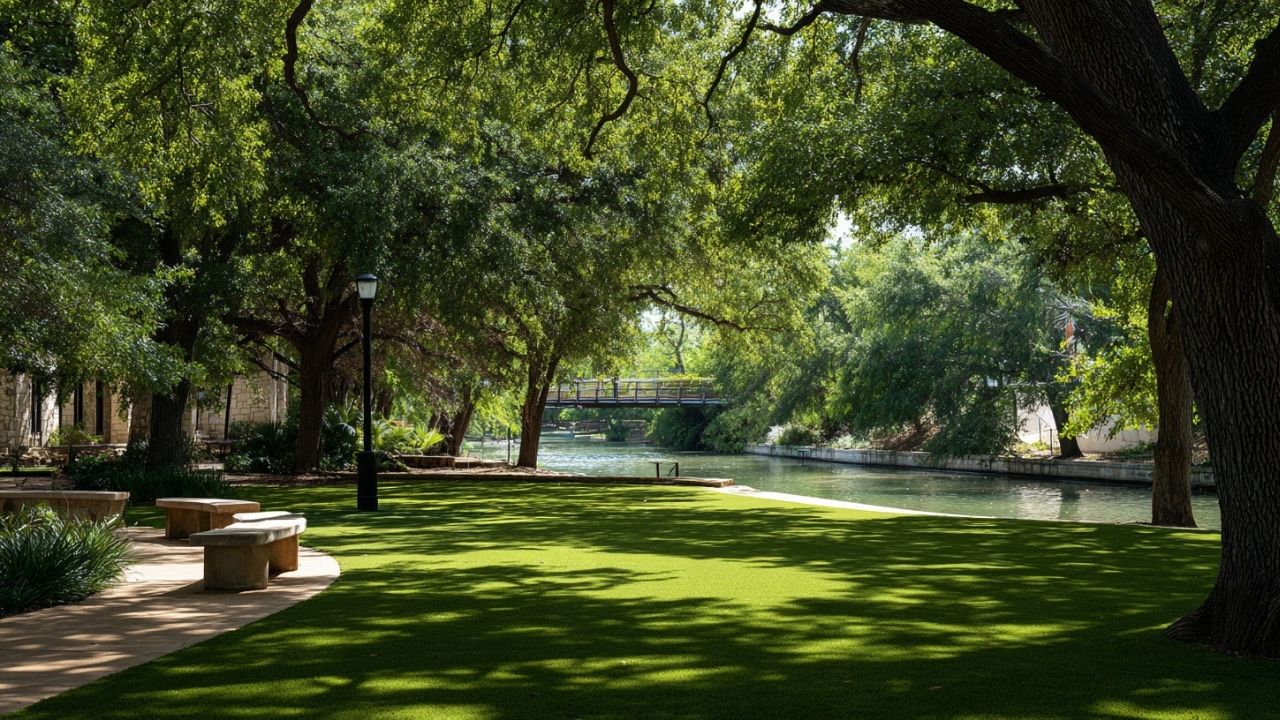
I remember walking through this San Antonio park on a scorching July afternoon, watching the parks director literally point at brown patches while explaining they’d already blown through their quarterly water budget by May. The city council was breathing down his neck about drought restrictions, the community was complaining about the eyesore, and he felt stuck. This was a high-visibility park right off the River Walk extension, so doing nothing wasn’t exactly one of his options.
Challenge: City park with failing natural grass, high water costs, constant maintenance.
Solution: LXR PRO-73S for aesthetic areas, 69TS for high-traffic zones.
Results:
-
- 85% reduction in water usage
- $25,000 annual maintenance savings
- Increased park usage year-round
Denver Multi-Family Property: 15,000 Sq Ft
The property manager at a Denver apartment complex called me sounding absolutely defeated. She’d just gotten her third complaint that week about dogs tracking mud through the hallways, and the courtyard looked like a war zone every spring when the snow melted. They’d tried reseeding twice. But between the altitude, the unpredictable weather, and 40+ dogs using the space daily, nothing was working. She needed something that could handle paws, weather, and resident expectations without requiring a full-time groundskeeper.
Challenge: Pet-friendly apartment complex with muddy, patchy grass.
Solution: 70T Series with Envirofill infill for odor control.
Results:
-
- Eliminated mud tracking
- Reduced landscaping staff hours by 60%
- Increased resident satisfaction scores
Orange County Corporate Campus: 30,000 Sq Ft
A few years back, our team met with the facilities team at a tech campus in Orange County. Their CEO had apparently made an offhand comment about the courtyard looking “tired” during an investor tour… making it suddenly everyone’s very real problem. They needed something that screamed “we’ve got our act together” while dealing with California’s water restrictions and hundreds of employees cutting through the space daily for lunch breaks. The kicker? They wanted it done between quarters without disrupting operations, which gave the team about six weeks to pull off a 30,000 square foot transformation.
Challenge: Professional appearance required, high foot traffic, drought restrictions.
Solution: LXR PRO-73S for courtyards, 50T Series for perimeter areas.
Results:
-
- Maintained pristine appearance year-round
- Compliance with water restrictions
- ROI achieved in 5 years
Making Smart Choices for Commercial Turf
It’s very rare for sourcing commercial synthetic turf to only be about finding the cheapest option. Usually it’s really about finding the right solution for your specific needs and budget. Getting there is a healthy combination of clear project requirements, thorough supplier evaluation, and realistic budgeting. And you have the tools to do it!
So, for your commercial landscaping project, keep a few things in mind:
✅ Define your needs first (traffic, aesthetics, budget)
✅ Request samples before committing
✅ Evaluate total cost of ownership, not just upfront price
✅ Choose suppliers with commercial experience and support infrastructure
✅ Don’t skip proper installation—it makes or breaks longevity
✅ Plan for minimal but necessary maintenance
The road map is here, and you can totally get your project across the finish line… beautifully, functionally, and budget-fully. (Is that a word?) Your corporate campus, municipal facility, or multi-family property is a few smart decisions away from years of low-maintenance, high-performance turf. So do your homework, ask the right questions, and partner with suppliers who understand commercial projects.
Ready to start your commercial turf project? Artificial Turf Supply is ready to help!
Request samples, get a custom quote, and connect with commercial synthetic turf professionals to bring your vision to life.