



If you gathered all the best artificial grass suppliers in one room and asked them what your first priorities should be for choosing turf you’ll love for years to come, want to know one of the most consistent top answers will be? You guessed it… a great turf texture. It’s easy to get caught up in finding grass with just the right look, but all the turf pros will suggest you find a lawn material that feels as good on your feet as to your eyes.
You really don’t want to end up like a few customers the Artificial Turf Supply have rescued over the years. After thinking they’d chosen the artificial grass that’d make their lawn or outdoor space really sing, they ended up really, really not liking how it felt when they walked on it. Or their pets didn’t like it. You don’t want to find stuff that ends up feeling like plastic needles under your kids’ or guests’ feet.
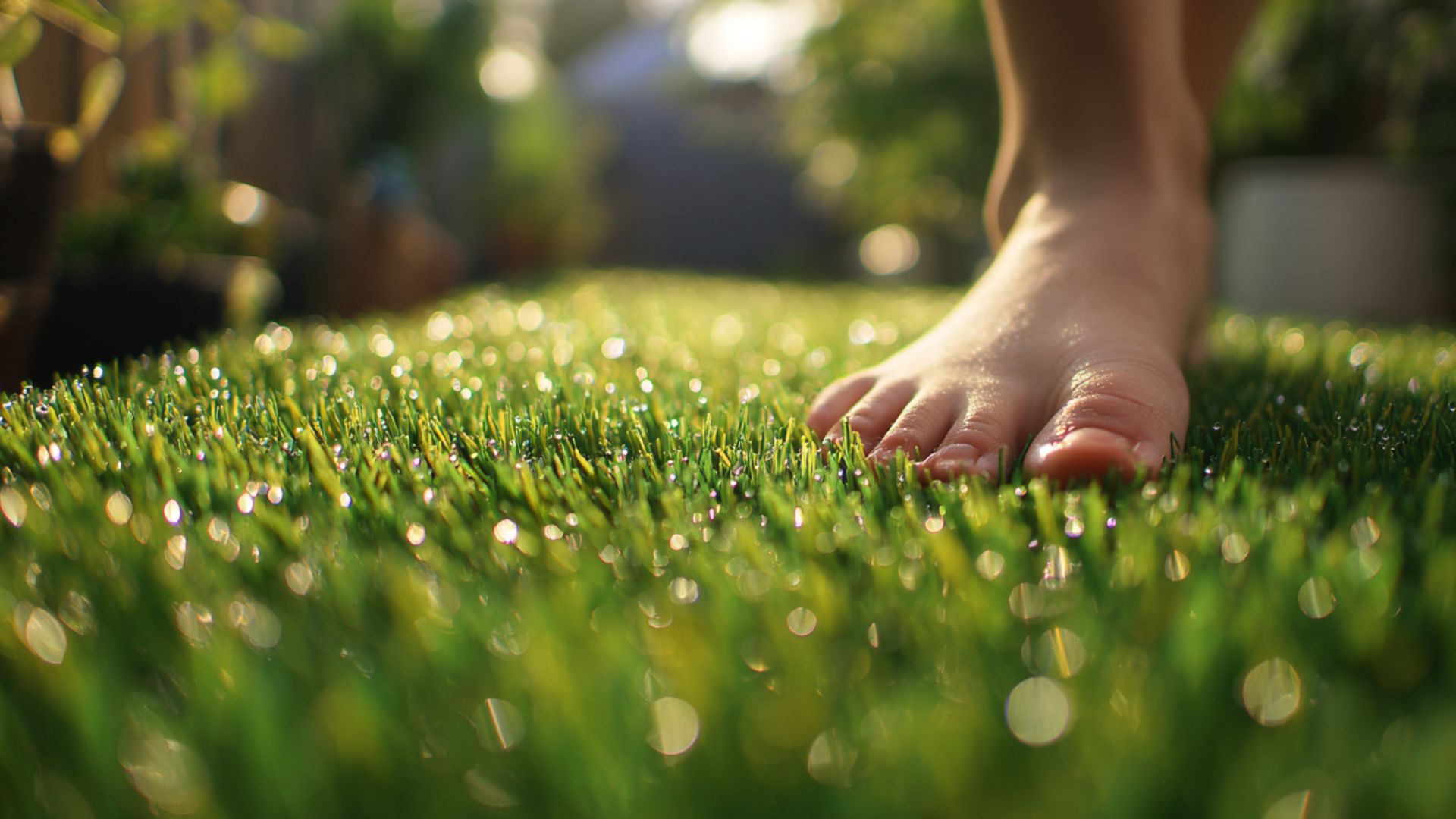
Knowing the ins and outs of what makes up a turf’s texture is your absolute best bet for getting the right shade of green and a foot-feel you’ll love even in barefoot weather.
What do Artificial Grass Suppliers Mean by “Texture”?
When I first started in this industry, I thought texture just meant “soft” or “rough.” It’s an easy assumption to make, but it also hugely simplifies all the little details that give your turf a comfortable on-the-skin feel. So, what all makes up texture? It’s actually this complex combination of fiber material, pile height, blade shape, and density… all working together. Here’s how I’ve heard the Artificial Turf Supply team explain it to customers: remember choosing carpet for your first home? You probably didn’t put the same carpet in your master bedroom that you put in your basement rec room. Same principle applies here.
Every time customers walk through our showroom, their faces change as they run their fingers across different samples. It’s not until you experience a handful of different options that you get that “aha” moment. When you realize how texture affects everything. How it feels during your morning yoga, how it looks when the neighbors peer over the fence, even how hot it gets during those August afternoons.
Helping customers have these eye-opening moments is genuinely one of our team’s favorite parts of the job.
The Fiber Materials Pro Artificial Glass Suppliers Recommend
I’m guessing it won’t surprise anyone that the first thing that affects a turf texture is the material it’s made from. Shocker, right? But an experienced turf supplier will be able to help you really dig into all the little gritty details that separate the only okay grasses from those you should really look at.
| Fiber Type | Softness | Durability | Price | Best For |
|---|---|---|---|---|
| Polyethylene | Excellent | Good | Moderate | Family lawns, play areas |
| Nylon | Good | Excellent | High | Sports fields, high-traffic |
| Polypropylene | Fair | Fair | Low | Decorative spaces |
| Blend | Very Good | Very Good | Moderate-High | Versatile use |
Polyethylene: The Comfort Choice
We’re talking texture, so let’s start with the fake grass material option that really does it the best. Polyethylene. When neighbors ask which feels the best on those toes, this is my go-to answer. Of all the options you can find on today’s artificial grass market (and there are A LOT of options) a polyethylene blade just feels the most like real, natural grass. My youngest loves to practice cartwheels barefoot on this stuff.
So, does this natural-feeling turf have a trade-off? It generally doesn’t last as long as some other options, and it’ll probably need to be replaced in 12 years instead of 15.
One of our residential top-sellers is the 70t Synthetic Turf. It uses polyethylene monofilament blades with a slight variation of colors for a natural appearance. Those are supported with texturized polyethylene monofilament thatch yarn (basically, those are the light tan strands set down into the turf), giving a more natural look while also supporting the turf’s springiness. Customers say they love it because it creates a beautiful, soft lawn that’s durable enough for families and pets. 15+ year warranty? What’s not to love?
Nylon: The Tough One
Looking to surface an athletic field? Do you have little ones (kids or pets) who’ll do their best to destroy your yard? You need a grass material that’s meant to deal with all that wear-and-tear. Artificial grass suppliers usually suggest nylon for these high-activity, performance-heavy spaces. It’s incredibly tough stuff, but keep in mind that resilience will make your texture noticeably stiffer. We’ve seen nylon turf survive years of soccer practice, unending doggie zoomies, and more large-group gatherings than I can count. Nylon does cost more, sure, but some really need that extra investment… especially when you don’t have to replace it time after time. Some of our clients who’ve sourced commercial synthetic turf with us have had the same nylon turf for nearly 15 years now.
Here are a few Artificial Turf Supply recommendations for different nylon grass applications:
- Indoor Athletics: try the MultiSport PRO 34np
- Outdoor Athletics: the SportPRO 42 requires no pad, comes in different colors
Polypropylene: The Budget Option
Some synthetic turf shoppers prioritize budget. Totally understandable, and I’d recommend polypropylene for them. But I’ll be straight with you. Our team doesn’t generally recommend polypropylene because it just doesn’t look great or last very long. Maybe you’re staging a home for sale, or you need something temporary for an event space. But since the Artificial Turf Supply team’s goal has always been to provide turf with a long-lasting warranty (you’ll see that 15+ Year Warranty graphic all over our products), we don’t really offer polypropylene options often.
Blending Your Turf Material Options
Most people don’t have a lawn or outdoor area that’s only used for one activity or reason, especially homes. If you read about the three materials above and thought, “I really just want all of that,” you might want to look at using different types in different areas of your space. A great example of this is when our customers ask us for the best solution for a backyard putting green. We get consistently good reviews after our golf-loving customers install the ProPUTT PE for the putting green, then surround it with our polyethylene 50t for the fringe.
Pile Height Suggestions from Experienced Grass Suppliers
Don’t overlook the importance pile height. This is a big determiner of your artificial grass’s texture, and taller isn’t always better. When I was first learning the ins and outs of this biz, I thought 3-inch pile would always give a better, more luxurious look. Fast forward six months, though, and you could be looking at a matted down mess that looks (and feels) terrible. Now I know better… pick a pile height based on your intended usage.
Short pile (0.75-1.5 inches) is what I recommend for putting greens and modern designs. Those blades will stay upright better for a consistent look over the years. Plus, a shorter pile requires almost zero maintenance. Less gets stuck down in the fibers; less likely to bend and matt in patches.
Medium pile (1.5-2.5 inches) is my sweet spot for most families. The Artificial Turf Supply team recommends a medium pile about 70% of the time. Natural look? Check. Good underfoot feel? Check. Do you have to baby it to keep it looking nice? Nope. Most artificial grass suppliers will steer you toward this for good reason.
Tall pile (2.5-3.5 inches) can look absolutely gorgeous… when it’s maintained properly. I have one neighbor, a retired gentleman who genuinely enjoys yard work (go figure), who brushes his tall pile turf twice a month. I don’t envy the effort, but it looks like a magazine cover. And it’s incredibly soft to walk on. But if you’re not able or willing to devote that much attention? Not the best choice.
Artificial Turf Blade Shapes and Styles
This is where things get interesting, and honestly, where the technology has kind of blown my mind over the years. Back in the day, turf just had flat blades that looked obviously fake. Now, you can find artificial grass suppliers selling turf options with a few different blade shapes. Mother Nature didn’t create just one grass blade shape, following her lead just makes sense.
W-shaped blades: a common go-to recommendation for most residential installations. I’ve watched these bounce back birthday parties with thirty kids running around for hours. Plus, the way those W-shaped blades reflect light from different angles; you don’t get that telltale artificial shine.
C-shaped blades: these blades have an amazing memory retention. Somehow they just keep sprining back to their designed shape. They’re not quite as durable as W-blades, but they feel softer.
Diamond-shaped blades: the new kids on the block (no 90’s boy band references, please). I’m always a bit hesitant about jumping onboard every new technology, but after seeing more than a few of these blade types installed, I’m impressed. Like all newer products, these aren’t the cheapest. But they seem to combine the best of both worlds… toughness and a natural look.
UV Resistance: Protection from Sun Damage
Some shoppers aren’t even aware that UV resistance is a thing with artificial turf. A good artificial grass supplier will let you know exactly how important it is, though. Most outdoor turf installations will see constant sunlight exposure. You know how we’ve learned how your skin reacts to sun overexposure? Yeah, it’s not great for turf that doesn’t have built-in UV resistance, either. Think faded and brittle… not the texture you want for your lawn.
High-quality artificial grass has UV inhibitors built right into the fiber during manufacturing. It’s not some spray-on coating that wears off. It’s part of the molecular structure. I always tell customers to specifically ask about a turf’s UV warranty. If it’s different than the standard warrant or not covered at all, that’s a big red flag.
So, if an artificial grass supplier can’t tell you about their UV testing protocols or show you certification documents, it’s time to dip out. The reputable manufacturers test their products under conditions equivalent to 10+ years of intense sun exposure.
Drainage Systems: Managing Water Flow
Few things ruin a synthetic turf’s texture faster than moisture. Mold, mildew, wrinkles, matting… it’s not great. And you don’t have to look hard to find turf installation horror stories related to improper drainage or low-quality backing that doens’t allow water to drain through.
Our turfs options offer 30+ inches per hour drainage rates. To put that in perspective, that’s faster than water drains through most natural soil. The backing should have drainage holes every 4-6 inches. When you order your turf samples, make sure to flip them over and check out the backing material. You want to see perfectly spaced holes across it all. It matters.
For those of you with dogs, drainage becomes even more critical. They’re definitely going to add to the amount of moisture regularly landing on your lawn. I’ve got one customer with three German Shepherds, and thanks to proper drainage with antimicrobial treatment, you’d never know it. No smell, no puddles, just clean, dry turf year-round.
Backing Materials: The Foundation of Quality
Nobody gets excited about backing material. But I’ve seen some homeowners get upset about it after their new grass fell apart. The backing is literally what holds your turf together.
Polyurethane backing is what I insist on for any installation I’m involved with. Yes, it costs more, but here’s why it matters: last winter, we had temperature swings from 70 degrees to below freezing within 24 hours. The lawns with polyurethane backing didn’t budge. The latex-backed turf? Some of them developed ripples and never laid flat again.
Latex backing works in perfect conditions. Mild weather, light use, no temperature extremes. So unless you’re installing inside a climate-controlled building, where does that perfect world exist? I’ve seen latex backing become brittle and crack after just a few years. It’s just not worth the risk for the small savings.
Infill Types & Options for Turf Texture
Infill is another artificial grass feature that is easy to overlook, and choosing the best turf infill really improves your turf’s texture, performance, as well as offering a few other benefits.
Silica sand is old reliable. It’s what I used in my side yard where the kids don’t play much. It does the job, keeps costs down, but on hot days, you’ll want to wear shoes. Envirofill is one of those infill options that adds surprising benefits to your lawn. It’s eco-friendly, clean, low-maintenance, and adds anti-microbial protection… helping your artificial grass resist bacteria, mildew, odors, and stains.
Rubber infill makes sense for play areas. You’ll find this used a lot of playgrounds, helping ease the number of scraped knees. Parents can feel good knowing that the recycled materials are EPA-approved.
Organic infills are having a moment, and I get it. I recently used cork infill for an eco-conscious client, and even I was impressed. It stayed noticeably cooler than the sand-filled turf next door, and it has this pleasant, earthy smell when it gets wet.
Cooling infills are game-changers. Ever sat on a plastic chair that’s been baking in the sun for a few hours? Artificial grass can be similar, but cooling infill turf is often 20 degrees cooler than artificial grass with standard infill. For turf shoppers living in the southern US, make sure your infill has cooling tech.
Climate and Regional Considerations
After installing turf from Seattle to San Antonio, I can tell you climate matters more than most people realize. What works in Portland might fail spectacularly in Phoenix.
In hot climates like where my brother lives in Vegas, heat is enemy number one. I helped him choose turf with heat-reducing technology and lighter colors. His backyard is actually usable in July now, which wasn’t the case with his old natural grass that died every summer anyway.
For my clients in rainy areas, I focus on drainage and backing stability. I’ve got a customer in Houston whose yard used to be a swamp after every storm. Now, with proper turf and drainage, his kids can play outside an hour after the rain stops.
Cold climates bring their own challenges. I learned this installing turf in Denver. The freeze-thaw cycles are brutal on inferior products. One customer ignored my advice and bought cheap turf. After one winter, the backing had separated in multiple spots. We ended up replacing it with a quality nylon blend designed for temperature extremes.
Warranty and Guarantees: What Artificial Grass Suppliers Should Offer
Here’s my go-to artificial turf shopping advice: ask all the warranty questions you can think of. Duration, coverage, exceptions… everything. I’ve seen too many people burned by “great” warranties that turned out to be worthless.
What I look for and recommend:
- 8-15 year manufacturer warranties that specifically cover UV stability and wear
- Pet-specific warranties if you have dogs (trust me, you need this)
- Installation warranties from certified installers
- Fade resistance guarantees with actual percentages or numbers, not vague promises
Read every word of that warranty. Some require professional cleaning every year. Others are prorated, meaning coverage decreases over time. The best ones are transferable—I’ve had several clients tell me it helped sell their homes.
Durability Determines Texture in the Long Run
Your artificial lawn’s texture and durability go hand-in-hand. One determines the other. And when artificial grass suppliers talk durability, we’re looking at several factors. Face weight tells you how much fiber is in the product. 40-80 ounces is recommended for residential use.
Tuft bind strength is crucial but often overlooked. This measures how hard you’d have to pull to yank out a fiber. You want a turf with at least 8 pounds of force. But honestly, just give it a good hand-pull test. You’ll know when you’re dealing with a flimsy bind strength.
Total weight matters for stability. Heavier products (80-120 ounces total) stay put better and last longer. Light turf might seem easier to install, but I’ve seen it develop problems much faster.
Maintenance Requirements by Texture Type
The best way to keep your synthetic lawn’s texture is knowing the rules and tips to maintain it. Because yes, artificial turf is lower maintenance than natural grass, but “no maintenance” is a myth.
Short, dense turf is the easiest. Just hose it off occasionally and run a brush over it maybe once a month. Usually takes about 10 minutes, depending on your lawn size.
Medium-pile turf needs a bit more attention. Run an artificial turf brush through it once a month to keep the fibers upright and redistribute the infill. It’s actually kind of therapeutic; like vacuuming but outside.
Tall, lush artificial grass requires the most work. You’re looking at weekly brushing to keep it perfect. Then you’ll also want to water it lightly regularly. Watering an artificial grass may seem silly, but it keeps the fibers cleaner by rinsing out the dust and build-up. If that doesn’t sound like something you can commit to, stick with a medium pile.
Your Final Decision – An Artificial Grass Supplier’s Perspective
As you’re choosing the right turf with the best texture for your space, here’s my best advice: be honest about your lifestyle. What matters most to you? And what will matter most in the long run? I’ve seen customers choose based on a desired grass appearance or price point… only to regret it later when they don’t like how it feels or realize it won’t last.
Think long-term. Upfront savings can be deceiving, so calculate the real cost over 10-15 years. Factor in replacement costs, maintenance time, and how you’ll feel looking at it every day. That “bargain” turf might not seem so cheap when you’re replacing it in five years.
And remember, you’re not just buying fake grass.
- You’re buying a comfortable outdoor experience, where you can take those shoes off and enjoy some sunshine.
- You’re buying time. Time in which you’re NOT mowing, watering, fertilizing, and worrying about brown spots.
- You’re buying peace of mind that comes with lower water bills.
- You’re buying a space that you, your family, and your friends can enjoy year-round.
The texture you choose becomes part of your daily life. It’s what you see from your kitchen window every morning. It’s what your kids play on. It’s where your dog naps in the sun. Take the time to choose right. Visit showrooms, ask questions, get samples. Don’t let anyone rush you into a decision.
And always, always talk to professional artificial grass suppliers before you buy: 877.525.TURF
Choose a turf supplier who listen to your needs rather than pushing their highest-margin product. The right supplier will ask about your lifestyle, your climate, your family, and your long-term plans. Our team prefers to see ourselves as educators, so you can make the best turf choices for you and your home or business.